← Back to Blog
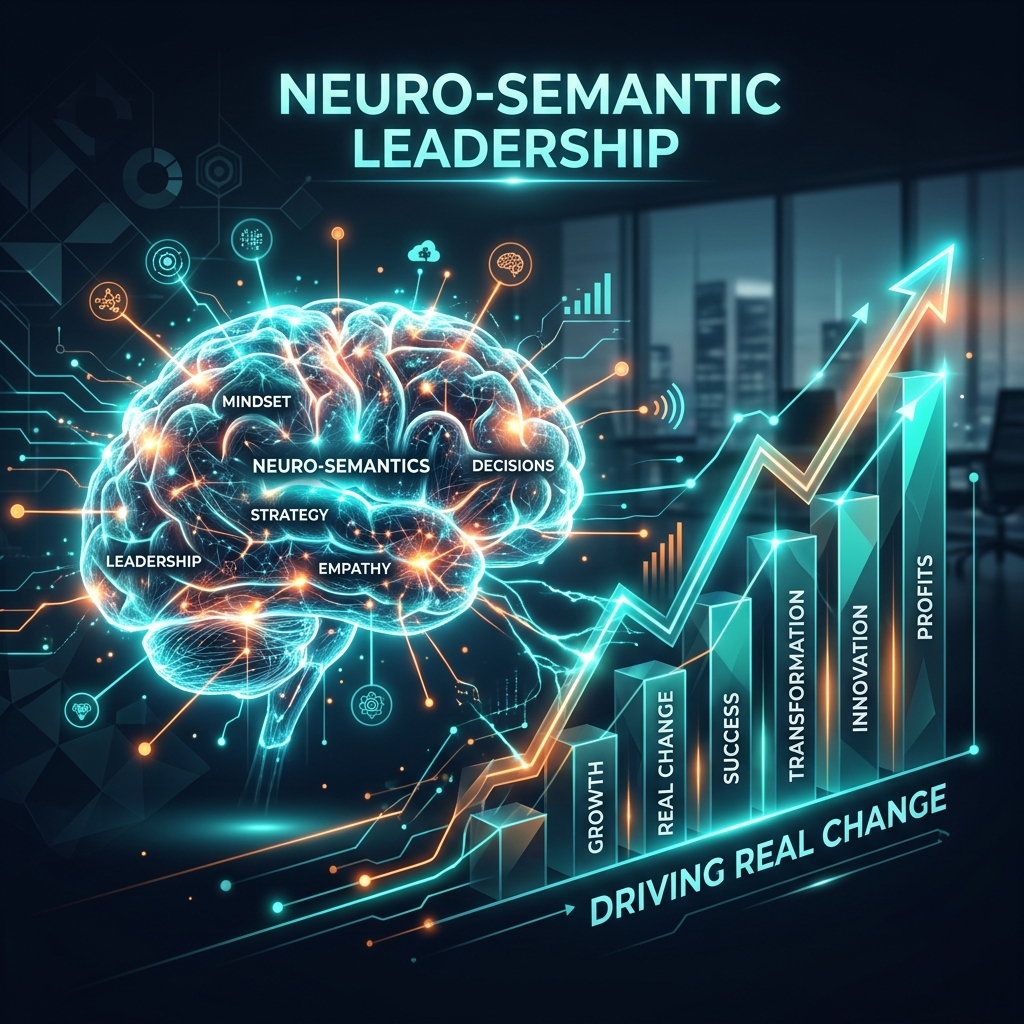
Why Neuro-Semantic Leadership is the Secret to Real Change
We live in a world obsessed with change. Companies are 'pivoting,' individuals are 'leveling up,' and societies are 'disrupting.' Yet, despite all the activity, so much of the 'change' we see is merely cosmetic. We change our systems, our tools, and our strategies, but we don't change ourselves.
Real change—the kind that lasts and spreads—is an 'inside-out' process. This is the core tenet of Neuro-Semantic leadership. It’s about understanding the relationship between our meanings (the 'semantics') and our performance (the 'neuro' or neurology). If we want to change what we do, we first have to change what things mean to us.
Traditional leadership often focuses on the 'what' and the 'how.' We give orders, we set KPIs, and we monitor performance. But Neuro-Semantic leadership focuses on the 'why' and the 'how we feel about it.' It recognizes that every person is a meaning-maker. The way they interpret a situation determines their emotional state, which in turn determines their actions.
A Neuro-Semantic leader doesn't just manage tasks; they manage meanings. They help their teams find higher purposes, reframe challenges as opportunities, and navigate the paradoxes of organizational life. They understand that a motivated, meaning-driven individual is far more effective than someone who is simply following a checklist.
One of the key concepts in Neuro-Semantics is 'Self-Actualization.' This isn't just a buzzword; it’s a rigorous framework for human development. It’s about identifying our highest potentials and developing the skills and mindsets to realize them. In a leadership context, this means creating an environment where everyone has the opportunity to grow meaningfully.
At TossIdeas 2026, many of our speakers and organizers come from the PROVOKASI community, which is rooted in these principles. We see leadership not as a position, but as a way of being. It’s about taking responsibility for our own meanings and helping others do the same. It’s about fostering 'abundant collaboration' instead of 'scarcity-based competition.'
When we lead from a Neuro-Semantic perspective, we become more resilient, more creative, and more empathetic. We are better equipped to handle the complexities and contradictions of the modern world. We don't just react to change; we lead it.
Change is hard because our old meanings are comfortable. They are like a well-worn path in the woods. Moving to a new path requires effort and a willingness to be uncomfortable. But it is in that discomfort that the real transformation happens. Neuro-Semantics gives us the map and the compass to navigate that journey.
We invite you to learn more about these concepts at TossIdeas 2026. Hear from leaders who have applied these principles in their own lives and organizations. Discover why Neuro-Semantic leadership is not just a different way to lead, but a different way to live.
Share this article:
Comments (0)